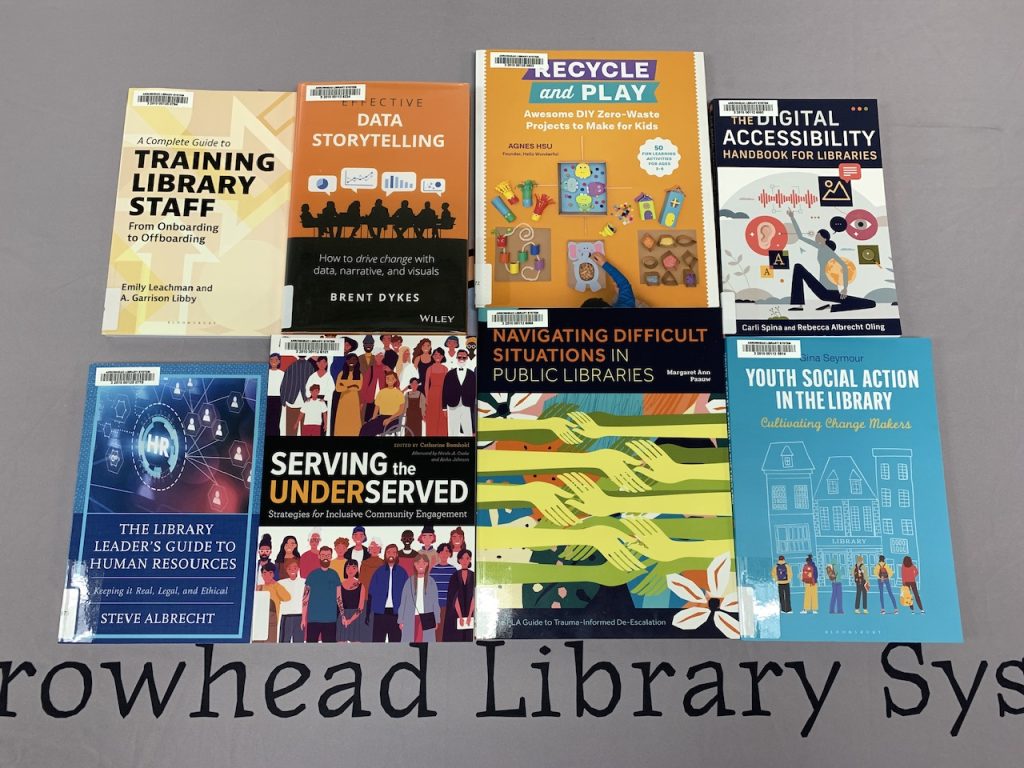
The Arrowhead Library System has added a number of new books to our Professional Collection that are available to borrow now! All these items can be found and requested in the online library catalog and in MNLINK. If you are a library worker and want to learn more about the Professional Collection or would like to suggest a book for purchase for this collection, please contact Stephanie at stephanie.wichlacz@alslib.info.
New Books by Title and Description:
Archival Basics: A Practical Manual for Working with Historical Collections (American Association for State and Local History)
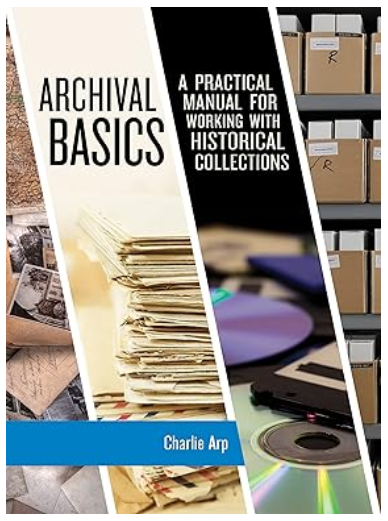
Charlie Arp
Archival Basics for Historic Record Collections is an introduction to the concepts, policies, infrastructure and tasks needed to collect, preserve and make archival collections available to researchers. The book is based on content presented in workshops by the Council of State Archivists and presented in an on-line course by the American Association of State and Local History since 2003. Arp focuses on the discreet tasks necessary to manage archival collections. This is a practical, how-to book on managing archival collections designed for those who have responsibility for such collections but lack formal archival training.
The book begins by defining historic records, archival collections and the differences between archives, libraries and museums while identifying the steps needed to manage archival collections. It then looks at collecting archival items including creating a collections policy, documenting the acquisition of archival items and the steps needed to bring those items into an archives. It discusses arranging, preserving and describing archival collections so researchers can find the information they seek. Next, it goes over what is needed to store, protect, and make archival collections available to researchers. The last chapters contemplates the policies, skills and infrastructure needed to successfully manage digital records and looks at creating digital copies of analog records to promote their use.
The book provides templates, questionnaires and examples to enable the reader to create customized archival policies and procedures that accommodate the particular circumstances they find themselves in. The book also contains exercises and quizzes designed to reinforce the retention and understanding of critical concepts. In addition to examples it has lists of additional resources so those who want more detailed information on particular topics can find it. This book is not the only reference book needed by those doing archival work, but it should be the first book they need.
Recommended for: Special Libraries, Academic Libraries
A Complete Guide to Training Library Staff: From Onboarding to Offboarding
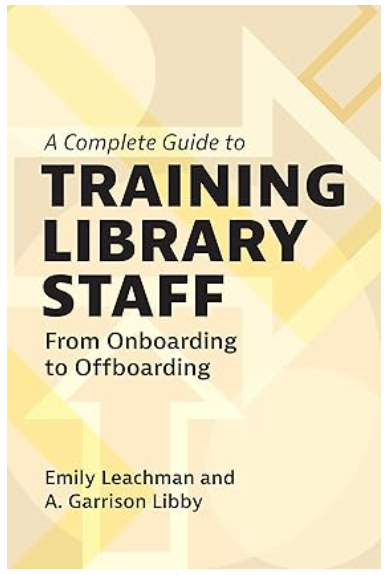
Emily Leachman and A. Garrison Libby
This practical guidebook presents an infrastructure for training library staff, starting with a robust onboarding process and continuing through a staff member’s entire duration at an institution.
Because library services and resources can change rapidly, ongoing training is an important aspect of library operations. Training can be a particular challenge at large, multi-branch library systems, because it can be difficult to ensure all staff are able to receive the relevant information.
Written for library managers and training leaders, A Complete Guide to Training Library Staff presents a comprehensive lifecycle for staff development with a focus on tools and techniques to build a sustainable training program, set staff up for success in their positions, and develop a positive and supportive community across the library. Authors Emily Leachman and A. Garrison Libby spearheaded their library’s movement to largely online trainings, which are inclusive of staff at all branch locations.
This practical guidebook helps managers and trainers develop a comprehensive plan that allows new staff to quickly become acquainted with the operations of the library, provides ongoing training to make staff aware of new procedures and services, and creates a collaborative and supportive training environment to empower staff to learn and lead.
Recommended for: Public Libraries, School Libraries, Academic Libraries, Special Libraries
Critical Data Storytelling for Libraries: Crafting Ethical Narratives for Advocacy and Impact (Critical Cultural Information Studies)
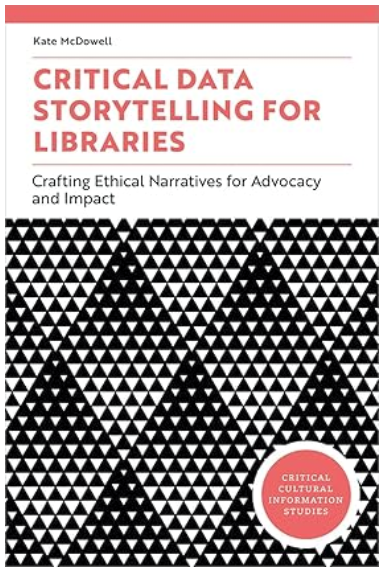
Kate McDowell
In today’s polarized landscape, libraries face two key challenges: the difficulty of turning raw data into narratives that effectively advocate for libraries, and the ethical complexities of representing communities in these stories. McDowell’s vital toolkit empowers librarians and information professionals to transform data into ethical, compelling narratives that connect with communities and advocate for their organizations. This book teaches both the practicalities of data storytelling and introduces critical approaches that ensure stories are inclusive, socially just, and impactful. Readers will find the book essential for communicating library value to help secure funding, resources, and community support. Applying theory to real-world scenarios, chapters cover:
- the dynamic interrelationships between storyteller, audience, and story which lie at the heart of storytelling;
- ways to mesh library data collection processes with long-term storytelling potential, prioritizing interaction over transaction;
- three time-honored and effective narrative strategies for organizing the informational and emotional content of library data stories, easily adaptable for any situation;
- approaches for emphasizing inclusivity and justice to ensure that library advocates can tell stories that challenge stereotypes, promote equity, and align their efforts with broader ethical and social goals;
- audience attitudes as challenges and opportunities for library data communication; and
- strategies for maintaining open and transparent public communication in the face of rampant misinformation and active disinformation campaigns.
Recommended for: Public Libraries, Academic Libraries, School Libraries, Special Libraries
The Digital Accessibility Handbook for Libraries
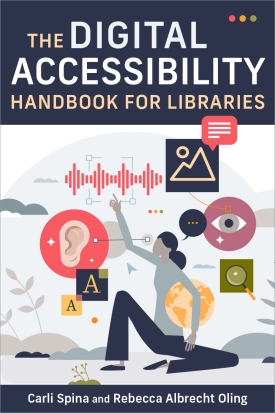
Carli Spina and Rebecca Albrecht Oling
Providing concrete guidance on integrating accessibility into all aspects of a library’s digital work, this book will serve as your one-stop guide to accessibility standards, processes, and best practices.
A complicated topic encompassing many disparate facets, digital accessibility in libraries is in constant flux as new technologies emerge and design standards continue to evolve. This makes it challenging for library workers to ensure that their libraries meet legal requirements while also fostering inclusion for all their community members. Incorporating advice from a range of outside accessibility experts and practitioners, this guide is here to help. It delves into practical steps you can take to ensure that your library’s online presence is welcoming to everyone and that all your digital offerings avoid barriers that can exclude users with disabilities. No matter your level of experience or type of library, from this book you will
- come to understand what is meant by disability and why libraries have obligations to support disabled users;
- learn about a wide range of software and hardware for creating inclusive spaces and services regardless of your budget limitations or staffing levels;
- get comfortable with the overarching principles of online accessibility and how they specifically apply to library websites, digital media and files, digital communications, and emerging technologies such as augmented reality, virtual reality, and artificial intelligence (AI);
- discover how libraries can verify the accessibility of the tools they develop or subscribe to, including best practices for working with vendors to optimize the accessibility of their library products;
- be invited to reflect upon the future of digital accessibility, particularly concerning education and hiring to ensure that accessibility remains central to the work done at all libraries.
Both Spina and Oling have worked within SUNY – The State University of New York to hone skills and thinking in this area, resulting in the Library Procurement Accessibility Toolkit, an ongoing project. They currently co-chair a subcommittee reviewing the SUNY libraries’ implementation of the Electronic Information Accessibility Policy.
Read an interview with the authors now!
Recommended for: Public Libraries, School Libraries, Academic Libraries, Special Libraries
Effective Data Storytelling: How to Drive Change with Data, Narrative and Visuals
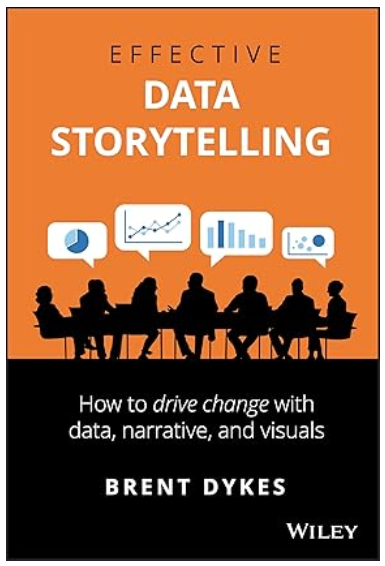
Brent Dykes
Master the art and science of data storytelling―with frameworks and techniques to help you craft compelling stories with data.
The ability to effectively communicate with data is no longer a luxury in today’s economy; it is a necessity. Transforming data into visual communication is only one part of the picture. It is equally important to engage your audience with a narrative―to tell a story with the numbers. Effective Data Storytelling will teach you the essential skills necessary to communicate your insights through persuasive and memorable data stories.
Narratives are more powerful than raw statistics, more enduring than pretty charts. When done correctly, data stories can influence decisions and drive change. Most other books focus only on data visualization while neglecting the powerful narrative and psychological aspects of telling stories with data. Author Brent Dykes shows you how to take the three central elements of data storytelling―data, narrative, and visuals―and combine them for maximum effectiveness. Taking a comprehensive look at all the elements of data storytelling, this unique book will enable you to:
- Transform your insights and data visualizations into appealing, impactful data stories
- Learn the fundamental elements of a data story and key audience drivers
- Understand the differences between how the brain processes facts and narrative
- Structure your findings as a data narrative, using a four-step storyboarding process
- Incorporate the seven essential principles of better visual storytelling into your work
- Avoid common data storytelling mistakes by learning from historical and modern examples
Effective Data Storytelling: How to Drive Change with Data, Narrative and Visuals is a must-have resource for anyone who communicates regularly with data, including business professionals, analysts, marketers, salespeople, financial managers, and educators.
Recommended for: Public Libraries, School Libraries, Academic Libraries, Special Libraries
Essentials of STEM Librarianship
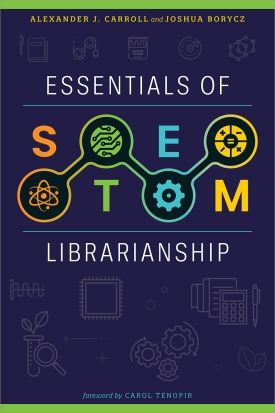
Alexander J. Carroll and Joshua Borycz; foreword by Carol Tenopir
As science, technology, and math programs continue to thrive at colleges and universities, this holistic guide shows academic libraries how to effectively support STEM education and research students and programs.
Amid overall falling enrollment figures for higher education, the growing success of STEM programs bucks the trend. Ensuring that these programs flourish has become a priority for administrators at the provost level and above. But this emphasis on STEM poses challenges for academic libraries, many of which have instead historically focused on the humanities and social sciences. This primer helps to fill that knowledge gap, demystifying the scientific teaching and research processes for LIS students and current academic librarians alike. Regardless of their background or level of experience, readers of this guide will
- gain an overview of the contemporary STEM teaching and research enterprise by learning about the roles and needs of STEM community members such as program administrators, tenure track principal investigators (PIs), non-tenure track teaching faculty, research staff, graduate students, and undergraduate students;
- become familiarized with the “research group,” the organizational structure through which these different personas come together to advance the university research enterprise;
- get pointers on building teaching and learning programs that enhance student success and designing research support services that integrate into STEM researchers’ actual workflows;
- receive proven outreach strategies for engaging STEM communities;
- learn approaches for incorporating AI (artificial intelligence) and LLMs (large language models) into information literacy programs for scientists and engineers; and
- discover how library leaders can support both nascent and established STEM librarians to advance STEM education and research at their local institutions.
Examination copies are available for instructors who are interested in adopting this title for course use. An e-book edition of the text will be available shortly after the print edition is published.
Recommended for: Academic Libraries
Gender-Inclusive Schools: How to Affirm and Support Gender-Expansive Students
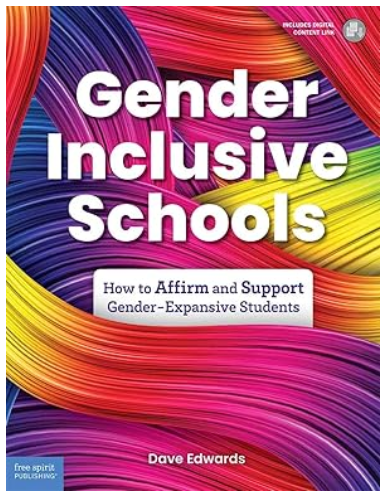
Dave Edwards
Help gender-expansive students feel safe, included, and affirmed at school.
Gender-expansive youth need school policies and practices that focus on their happiness, health, safety, and privacy. Schools and teachers need concrete, accessible strategies and tools for supporting them. This book empowers every educator with those tools and strategies. Whether educators are brand new to or already familiar with gender diversity topics, they’ll find opportunities to learn and practice in a judgment-free, low-stakes way.
This must-have resource:
- Helps educators understand, advocate for, and implement research-based best practices for gender-expansive youth.
- Includes discussion prompts and reflection activities at the end of each chapter.
- Shares strategies for affirming students through social transitions at school.
- Supports educators by offering model language to address challenging questions related to gender in school communities.
- Provides concrete actions educators can take to adopt gender-inclusive language and create learning environments that welcome students of all genders.
- Offers perspectives from gender-expansive youth in their own words.
Written by educator and advocate Dave Edwards, founder of the Gender Inclusive Schools organization, this book grew from the resources and education-specific trainings he has developed working with school districts, independent schools, and educators throughout the United States and in Canada, the United Kingdom, and Australia. Digital content includes reproducible forms from the book.
Recommended for: School Libraries
The Gift of Story: Exploring the Affective Side of the Reading Life
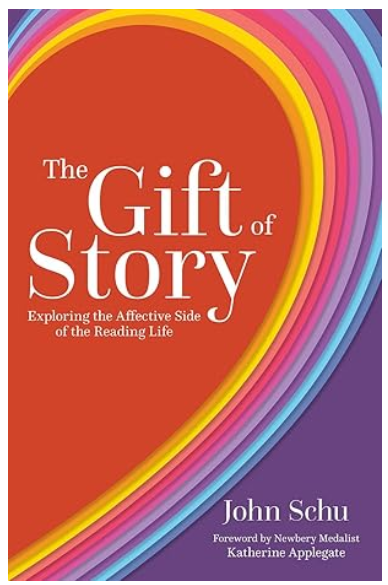
John Schu, foreword by Katherine Applegate
With the rise of teacher stressors, new and changing state standards, and high-stakes testing, it is more important than ever to remind literacy teachers and teacher-librarians about the reason that brought them to this profession: the love of story.
The Gift of Story: Exploring the Affective Side of the Reading Life, by John Schu (affectionately known as Mr. Schu all over reading communities), invites readers to consider literacy beyond its academic benefits and explore how universal truths found in stories can change us, inspire us, connect us to others, answer our deepest questions, and even help us heal along the way. Using his experience as a teacher, librarian, book lover, and story ambassador, Mr. Schu asks readers to reflect on what it means to share their hearts through stories and how it can connect us to individuals and learning communities.
The Gift of Story is presented through a study of five affective elements: Healer, Inspiration, Clarifier, Compassion, and Connector. Along the way, readers will encounter insightful contributions from educators, children’s writers, and illustrators, as well as recommendations for sharing the gift of story with learning communities including: treasured book suggestions that stir reflection, engaging tips for celebrating literacy, and heart-growing applications to lift classroom and library practices.
Celebrate the way we define and imagine ourselves through literacy by using stories to connect to others, build and strengthen community, and honor the children we were called to teach.
Recommended for: School Libraries, Public Libraries, Academic Libraries, Special Libraries
Handbook of Black Librarianship, 3rd Ed
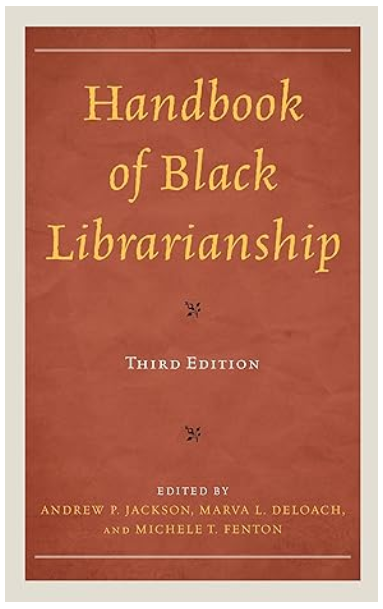
Edited by Andrew P. Jackson, Marva L. Deloach and Michele Fenton
Winner of the BCALA 2025 Literary Award for Outstanding Contribution to Publishing
As Dr. Josey and Ms. DeLoach wrote in their Introduction to the second edition of The Handbook of Black Librarianship: “In designing the second edition of The Handbook of Black Librarianship, the editors felt that this work should be a reference tool related to the various aspects of African Americans in librarianship and their work in libraries.”
That first edition covered issues faced by black library professionals in the various fields of librarianship; organizations formed; black library collections and books; resources and other areas of progress. The second edition, published twenty-three years later, highlighted more current events in Black librarianship: early and contemporary library organizations, vital issues, African American resources, discussions on and about librarianship, a focus on health librarianship, and information resources and education.
It has now been another twenty-two years since the last edition and time to reflect on “various aspects of African Americans” in our profession as well as the advancements over the past two and a half decades and to review those issues African Americans still face and how modern technological advancements have impacted our profession and the lives of Black librarians.
This third edition’s coverage includes:
Pioneers and Landmark Episodes; A Chronology of Events in Black Librarianship; African American Forerunners in Librarianship; Modern Day Black Library Organizations; Vital Issues in Black Librarianship; Library Service to Our Communities; Library Technology and Black Librarianship; Pearls from Our Retirees; Issues in Diversity, Inclusion and Multiculturalism; African Library Resources and Education; Banned Books; and Significant Books and Periodicals for Black Collections
Recommended for: Public Libraries, School Libraries, Academic Libraries, Special Libraries
Leveraging AI in School Libraries: From Basics to Best Practices
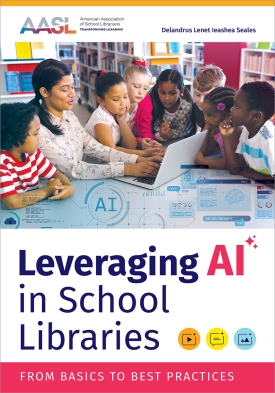
Delandrus Lenet Ieashea Seales
Helping school librarians understand how AI can be used in educational settings while aligning with both AASL Standards and content-area goals, this book demonstrates how to design and implement AI-enhanced learning experiences and support school library services and operations.
The sudden appearance of AI in educational settings is exciting and transformative—and also disorienting. But this shift presents new opportunities to enhance school library services, support teaching and learning, and streamline school librarians’ own professional workflows. Seales offers practical strategies, insights, and tools for school librarians to thoughtfully, inclusively, and confidently integrate AI into their daily instructional and working practices. Using this book, readers will
- understand effective prompt engineering and other foundational concepts of AI, laying the groundwork for engaging with AI tools in an educational setting;
- receive actionable guidance on developing AI policies and procedures that align with the school library’s mission while addressing stakeholder and community concerns;
- learn how to protect data privacy, evaluate AI tools for bias and fairness, and ensure responsible AI usage;
- discover strategies for leveraging AI to improve instructional practices, such as supporting personalized learning experiences, automating routine tasks, and providing data-driven insights to inform teaching strategies;
- explore ways that AI can enhance productivity by streamlining administrative duties, managing library resources more efficiently, and facilitating better communications with learners and educators;
- find AASL Standards-based instructional approaches to brainstorming, proofreading, research, and fostering creativity using AI tools;
- receive guidance on how to rethink plagiarism in the age of AI, including strategies for facilitating reflection, using AI tools for detecting potential plagiarism, and techniques for teaching learners how to properly cite AI-generated content using prompt generators; and
- get tips on staying ahead of emerging trends, anticipating and adapting to new developments, and ensuring that the school library remains at the forefront of educational innovation.
Recommended for: School Libraries
The Library Leader’s Guide to Human Resources: Keeping it Real, Legal, and Ethical
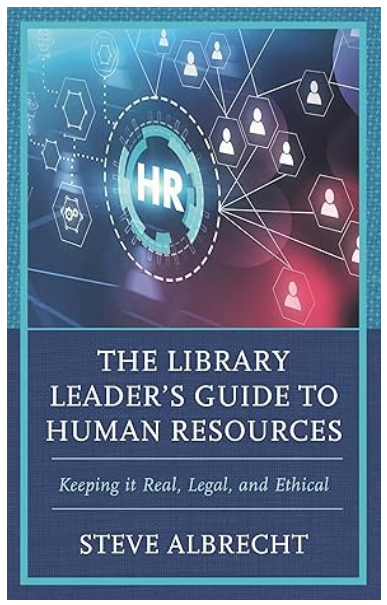
Steve Albrecht
The human resources (HR) function for libraries can range in size and scope, depending on the size of the library. The complexities of HR today call for a guiding manual to help keep the multitude of processes fair, legal, and accurate. This book provides the level of detail for new and seasoned HR leaders to use to staff and operate their libraries with the best employees they can find. It offers legal advice from labor law attorneys, and operational steps, policies, and processes from Dr. Steve Albrecht, a longtime HR consultant for municipal government.
Even with the support of an HR Department (however large or small), all library leaders who have supervisory responsibility over their staff (hiring, firing, performance evaluation, assigning job duties) must have a working, updated knowledge of HR issues related to employing people in their branches. This means that besides the myriad of other duties required to run a safe, efficient, useful library for the community, library leaders – from the Director, to the department heads, to the managers, to the frontline supervisors – each must know what they can and cannot do when it comes to HR laws, policies, guidelines, and best practices.
This includes legal issues related to screening, interviewing, and hiring applicants; coaching for improved work performance or employee behavior; mentoring employees for both promotional opportunities and succession planning; and more. Other books for library leaders may touch on HR issues as part of a broader look at supervising employees. This book will focus on it.
Recommended for: Public Libraries, Academic Libraries, Special Libraries
Navigating Difficult Situations in Public Libraries: The PLA Guide to Trauma-Informed De-Escalation
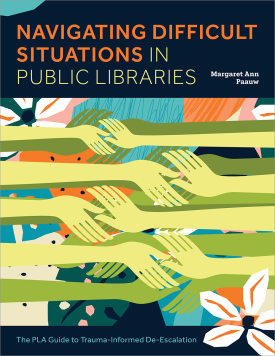
Margaret Ann Paauw
Providing trauma-informed strategies that address many common scenarios, this hands-on resource will show library workers how to de-escalate difficult situations safely and effectively.
Because libraries are community spaces that provide access to information, resources, and programming for people of all ages and backgrounds, conflicts between patrons, verbal or physical altercations, and other difficult situations can occur. These situations can be traumatic for those involved, whether patrons or staff, making it essential that librarians know how to de-escalate them in trauma-informed ways. Utilizing the framework from PLA’s best-seller A Trauma-Informed Framework for Supporting Patrons, this workbook walks readers through building micro-skills for handling difficult situations, providing
- a succinct overview of how to define and understand trauma, including its definition, causes, effects, and manifestations;
- evidence-informed approaches drawn from the fields of social work, psychology, and counseling;
- dozens of activities, handouts, and worksheets designed to spur reflection and help readers build upon the practices introduced in the book;
- guidance on debriefing, evaluation, facing compassion fatigue, and other aftercare topics; and
- appendices that provide information on mental health resources, crisis intervention hotlines, and further reading on trauma and burnout.
Check out this book’s Web Extras now!
Listen to a podcast with the author now!
Recommended for: Public Libraries
Reading Is My Window: Books and the Art of Reading in Women’s Prisons
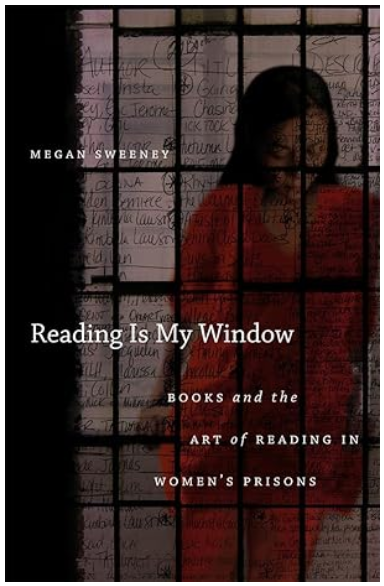
Megan Sweeney
Drawing on extensive interviews with ninety-four women prisoners, Megan Sweeney examines how incarcerated women use available reading materials to come to terms with their pasts, negotiate their present experiences, and reach toward different futures. Reading is My Window won the 2011 Emily Toth Award for Best Single Work in Women’s Studies (Popular Culture Association/American Culture Association), a 2010 PASS Award (National Council on Crime and Delinquency), and an Honorable Mention for the 2011 Gloria E. Anzaldúa Book Award (National Women’s Studies Association).
Recommended for: Public Libraries, Academic Libraries, Special Libraries, School Libraries
Recycle and Play: Awesome DIY Zero-Waste Projects to Make for Kids – 50 Fun Learning Activities for Ages 3-6
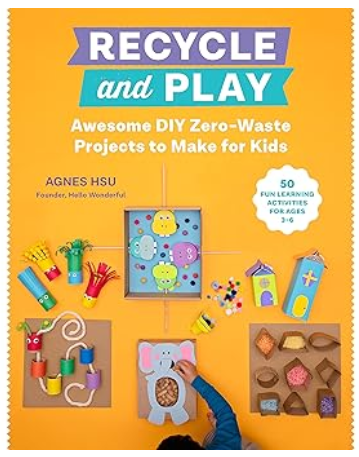
Agnes Hsu
Have fun, create, learn, and help the planet with the young kids in your life through 50 colorful, enriching activities made from stuff you already have.
With Recycle and Play, learn how to transform cardboard, bubble wrap, lids, containers, egg cartons, and other things that might otherwise be headed to a landfill into hours of engaging play at home. The fun, process-oriented projects invite children to be creative, explore senses, develop skills, and discover how things work, all while reinforcing the importance of reducing waste as part of a sustainable lifestyle.
In this book, you’ll find tips on how to extend play and learning for each project as well as helpful hints to engage your kids to come up with fun additions and extensions of their own.
While each of the projects includes clear step-by-step instructions and materials lists, you should feel free to adjust to your child’s interests and the materials you have on hand.
Organized by the type of material used, the zero-waste projects include:
- Car Garage and Ramp made from toilet paper tubes and cardboard (Learning Skills: Fine motor skills, creative play, and color recognition)
- Mess-Free Bubble Wrap Painting (Learning Skills: Art, sensory exploration, creative skills, color recognition)
- Busy Board Lid Activity (Learning Skills: Fine motor skills, cognitive skills)
- Alligator Letter Feed made from egg cartons (Learning Skills: Letter recognition, fine motor skills)
- Milk Carton School Bus with family photos (Learning Skills: Social development, cognitive skills)
- Matching Memory Game made from wipe lids (Learning Skills: Cognitive skills, fine motor skills, memory, object recognition)
Bond with your child, help them learn through play, and instill a lifelong respect for the environment with Recycle and Play.
Recommended for: Public Libraries, School Libraries
The School Librarian’s Guide to (Almost) Everything
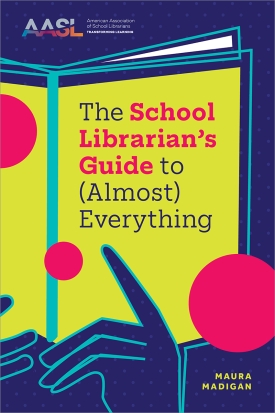
Maura Madigan
A must-have resource for every school librarian’s shelf, this guidebook offers practical advice in a friendly, conversational tone on an incredible breadth of topics rooted in AASL best practices. Both new and experienced school librarians will feel like they’re getting guidance from a trusted friend or mentor.
Because school librarians assume so many roles—leader, advocate, instructional partner, teacher, information specialist, and program administrator—their responsibilities vary widely. It’s impossible to be an expert in everything related to the job, especially when some issues or tasks might only pop up a few times a year. A handy reference tool serving up wisdom on nearly one hundred topics related to school libraries, bestselling author Madigan’s book provides to-the-point answers on many of the most common questions and conundrums faced by today’s school librarians. Packed with current advice based on AASL Standards, Common Beliefs, and ALA/AASL Position Statements, inside its pages you’ll discover
- overviews, answers, tips, and how-to steps on such topics as AI, job interviews, yearly plans, soft censorship, dynamic shelving, closing the library, social emotional learning, reluctant readers, strategic planning, and many more;
- easy-to-find information organized alphabetically and notated with cross-references, encouraging you to dip in and out as needed;
- succinct entries with supporting images and tables for quick guidance; and
- suggested sources for further exploration, all carefully vetted for quality and usefulness.
This book will become your go-to reference for answering quick questions about daily practice and your first stop when diving deeper into key issues.
Listen to a podcast with the author now!
Recommended for: School Libraries
Serving the Underserved: Strategies for Inclusive Community Engagement
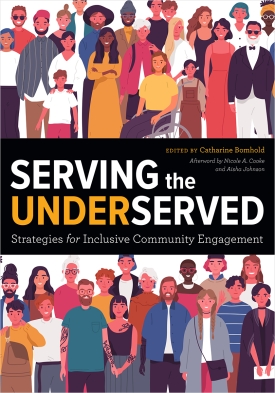
Edited by Catharine Bomhold, Afterword by Nicole A Cooke and Aisha Johnson
Focusing on needs and services outside the library walls, this book outlines a fresh approach to how libraries can think about and effectively reach underserved populations. Readers will discover strategies for identifying information needs where underserved populations are and learn about many successful services, programs, and partnerships.
Underserved populations frequently do not have access to a library—or they may even be unaware that they have an information need. How can we as a profession effectively reach them? This text, geared to both graduate and undergraduate LIS students as well as practicing librarians and library staff, provides contextual information on historically underserved populations as defined by the ALA Office for Diversity, Outreach, and Literacy Services (ODLOS), explores information use behaviors for these groups, and presents examples of successful strategies and programs. Readers will:
- understand the history, background, and demographics of ALA-identified underserved population groups, which include refugees and immigrants, rural or isolated communities, historically disadvantaged racial or ethnic groups, LGBTQAI+ teens, people with mental health challenges, and those experiencing homelessness;
- find ideas from real-world practice for effectively serving those population groups in their community;
- learn about concepts such as Reijo Savolainen’s everyday life information seeking (ELIS) and Elfreda Chatman’s small world lives and life in the round, theories that consider how a person’s circumstances affect their information needs, searching habits, and information authorities;
- see why misconceptions, stereotypes, and implicit biases about underserved populations can act as barriers to people accessing the information they need;
- be introduced to the concept of the “community information liaison,” a librarian who addresses information-seeking of their community outside of the library walls; and
- have information about support organizations and additional resources for further learning.
The text features contributed chapters from noted authorities such as Paul T. Jaeger, Ana Ndumu, Helen Chou, Bharat Mehra, Jeanie Austin, Emily Jacobson, Julie Hersberger, Carrie Scott Banks, Barbara Klipper, JJ Pionke, Nicole Dalmer, and Vanessa Kitzie.
ADVISORY BOARD:
Ozioma Aloziem (MSW, Affiliate Faculty, Department of Social Work, Metropolitan State University, Denver); Audrey Barbakoff (EdD, MLIS, CEO, Co/Lab Capacity LLC); Kathleen de la Peña McCook (Distinguished University Professor, School of Library and Information Science, University of South Florida)
Read a blog post by the editor now!
Recommended for: Public Libraries, Academic Libraries
Social Media in Healthcare Information
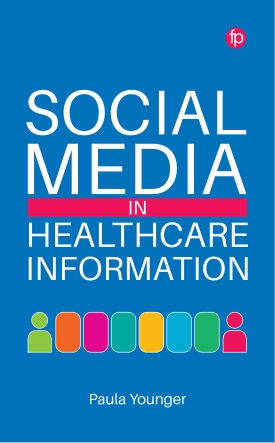
Paula Younger
Aimed at new and existing users of social media in their services and LIS students, this essential guide will provide readers with in-depth social media knowledge and authoritative guidance on how it applies to library services in a healthcare environment.
Social media has now been an integral part of life for over 20 years, revolutionizing so many aspects of our lives that it is now difficult to imagine a world without it. As smartphone technology has matured and users have grown more sophisticated in their use of various social media platforms, concerns about privacy, ethics, censorship, and misinformation have grown and become more complex.
Social Media in Healthcare Information provides an overview of current and recent developments in social media, concentrating on the most influential and well-established platforms. In addition to drawing together some of the most recently published scholarship in this area, this necessary book includes practical tips and considerations of how the platforms can be used to support knowledge and library service provision in healthcare settings as well as
- the use of social media in healthcare research and medical education;
- COVID-19 and misinformation;
- digital inequalities and technological barriers;
- confidentiality, privacy and security;
- social media campaigns, data analysis and trends; and
- AI, big data and the future-proofing the profession.
Recommended for: Public Libraries, Academic Libraries, Special Libraries, School Libraries
Supporting Neurodiverse Students in Academic Libraries
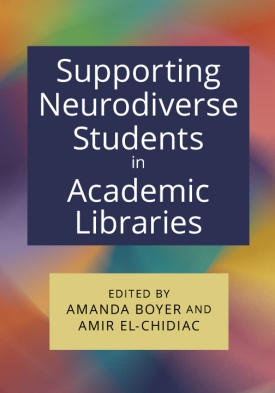
Edited by Amanda Boyer and Amire El-Chidiac
Neurodiverse students encounter myriad barriers and hurdles to thriving in academia, and there is an increasing need for all types of accessibility in our libraries. Librarians and educators working in academic institutions can partner with neurodiverse students to help them flourish on campus and establish community.
In five parts, Supporting Neurodiverse Students in Academic Libraries offers practical advice that can be easily implemented and scaled to various types, sizes, and budgets of libraries.
- Instruction
- Services
- Cross-Campus Collaborations
- Resources
- Spaces
Chapters include effective practices for students with autism spectrum disorder, brain trauma, and PTSD, but also depression, anxiety, and other mental health disorders. Supporting Neurodiverse Students in Academic Libraries demonstrates the power of working alongside students to create welcoming spaces, services, and resources that can help all students succeed.
Recommended for: Academic Libraries
Valuing the Community College Library: Impactful Practices for Institutional Success
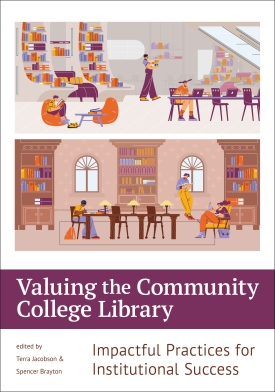
Edited by Terra Jacobson & Spencer Brayton
Sharing the work of our community college libraries—our efforts, stories, and how we’re advancing the institution—and advocating to our peers and administration can boost the libraries’ role on our unique campuses.
Valuing the Community College Library: Impactful Practices for Institutional Success provides a holistic approach to exhibiting community college library value through historical context, practical applications, and future thinking. Through case studies, editorials from administrators, and practical approaches, it addresses why community college libraries exist and should exist, and the nuanced approaches to how library workers situate themselves at their institutions.
Community college libraries need to provide access to content, people, space, and technology and offer instruction, but can also serve as an outreach arm in advancing the mission of open enrollment and affordable access to higher education. Valuing the Community College Library can help you be an advocate for your library on campus and in your community.
Recommended for: Academic Libraries
Youth Social Action in the Library: Cultivating Change Makers
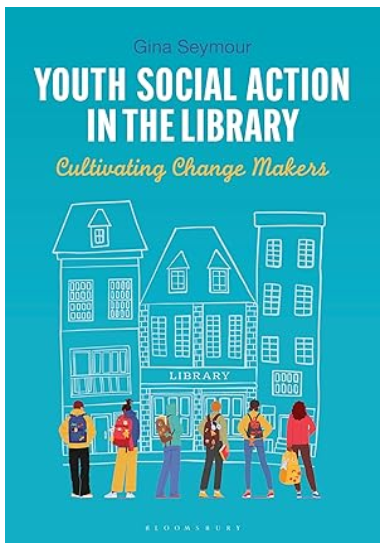
Gina Seymour
Learn how to take an apolitical, unbiased stance to support students as they pursue research, literature connections, maker activities, and civic engagement projects in their communities, nationally, and globally.
This book outlines school and public library programs, activities, and collaborative projects that will help students learn how to accomplish their goals in their communities. Highlighting the role of the librarian in fostering critical thinking and problem-solving skills, the book explores controversial topics to qualify and expand best practices.
By incorporating the programs in the book, librarians can help students learn how to have reasoned arguments inside and outside of the classroom and to become responsible members of society. UN Sustainable Development Goals are addressed, making this book not only based in community but global in scope. Numerous examples of youth activism from volunteering to protest marches are explained and are broad enough to be applied not only to current trends but also to future causes.
Recommended for: Public Libraries, School Libraries