The Arrowhead Library System has added a number of new books to our Professional Collection that are available to borrow now! All these items can be found and requested in the online library catalog and in MNLINK (if your library is not on Horizon). To search for books that match your type of library, use Ctrl + F and type Academic Libraries, Public Libraries, School Libraries or Special Libraries into the search bar.
If you are a library worker and want to learn more about the Professional Collection or would like to suggest a book for purchase for this collection, please contact Stephanie at stephanie.wichlacz@alslib.info.
New Books by Title and Description:
Accessible Conversations in Small and Rural Libraries
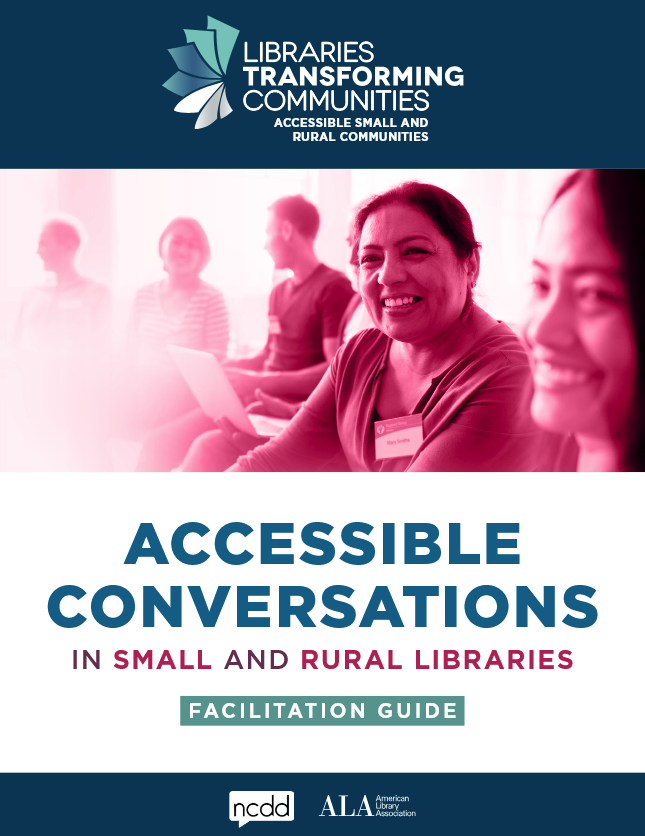
Published by NCDD (National Coalition for Dialogue & Deliberation) and ALA (American Library Association)
Recommended for: Public Libraries
This guide serves as a companion resource to Facilitation 101: Leading Conversations in Small and Rural Libraries, offering deeper guidance on creating community conversations that are accessible, welcoming, and inclusive. While developed for libraries, the strategies and considerations outlined in the guide can be adapted by any organization seeking to engage diverse community members in meaningful dialogue.
The guide explores how facilitators and event planners can proactively identify and reduce barriers to participation, ensuring that more people can fully engage in community conversations. It encourages planners to consider accessibility from the earliest stages of event design and provides practical tools for creating spaces where all participants feel valued, respected, and able to contribute.
Topics include:
- Understanding accessibility and inclusion
- Identifying barriers to participation
- Planning accessible events and meetings
- Physical, sensory, and communication accessibility
- Supporting diverse participant needs
- Inclusive outreach and engagement strategies
- Creating welcoming environments
- Facilitating conversations about accessibility within the community
The guide pays particular attention to engaging community members who are often underrepresented or excluded from public conversations, including people with disabilities, neurodivergent individuals, veterans, older adults, unhoused community members, and others whose voices may not always be present in community decision-making spaces.
More than a checklist of accommodations, this resource encourages a broader approach to accessibility that centers belonging, equity, and meaningful participation. By helping facilitators create more inclusive spaces, the guide supports stronger community relationships and ensures that a wider range of voices can help shape the future of their communities.
Resource: Accessible Conversations Guide (free PDF)
Resource: Facilitation Guide (free PDF)
Compact Copyright: Quick Answers to Common Questions, Second Edition
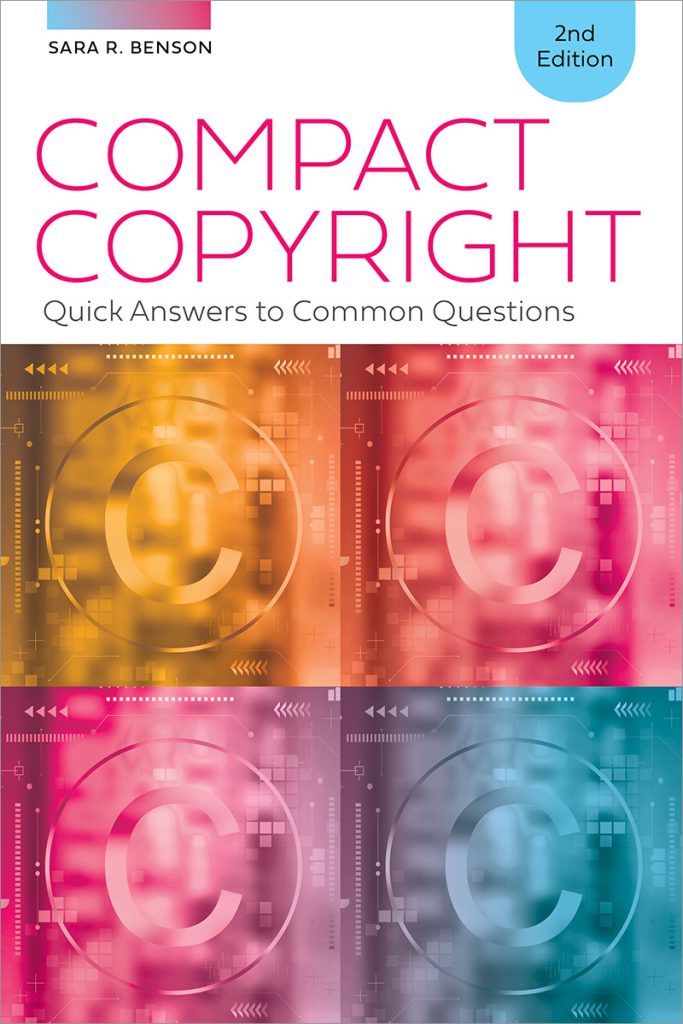
By Sara R. Benson
Recommended for: Academic Libraries, Public Libraries, School Libraries, Special Libraries
Newly revised to reflect copyright’s ever-changing landscape, this updated legal companion offers to-the-point guidance for dozens of situations, alongside discussion questions that will encourage learning and reflection for current practitioners and LIS students alike.
When faculty, students, and colleagues come to you with legal questions and you suddenly find yourself in the thick of a copyright conundrum, you don’t need pages of historical background information and long-winded legal explanations — you need answers, fast. Previously included in Choice‘s Top 75 Titles and Resources for Community College Libraries, this bestselling book gives you just that, succinctly addressing common head-scratchers and scenarios in a way that you will lead you to accurate answers quickly. Ideal for on-the-fly reference, staff training, and LIS instruction, Benson’s guide provides excerpts from the law itself alongside tools and suggested additional resources for digging deeper. Compact Copyright
- skillfully explains legal principles in plain language for more than 50 of the most common real-life scenarios library workers face;
- includes new chapters on cutting-edge developments such as AI, separability, and copyright and data;
- provides a primer on contracts and licensing basics, including Creative Commons licensing;
- explores key topics like the First Sale doctrine, Fair Use, public domain, making copies for preservation, the TEACH Act, interlibrary loan, sovereign immunity, and the Digital Millennium Copyright Act (DCMA);
- offers pointers on access to copyrighted material for patrons with disabilities and other concepts related to accessibility;
- discusses select international copyright library issues; and
- includes a Fair Use checklist, copyright and film screening best practices, and additional recommended reading and materials.
Creating Generative AI Policies: A Guide for Public and Academic Libraries
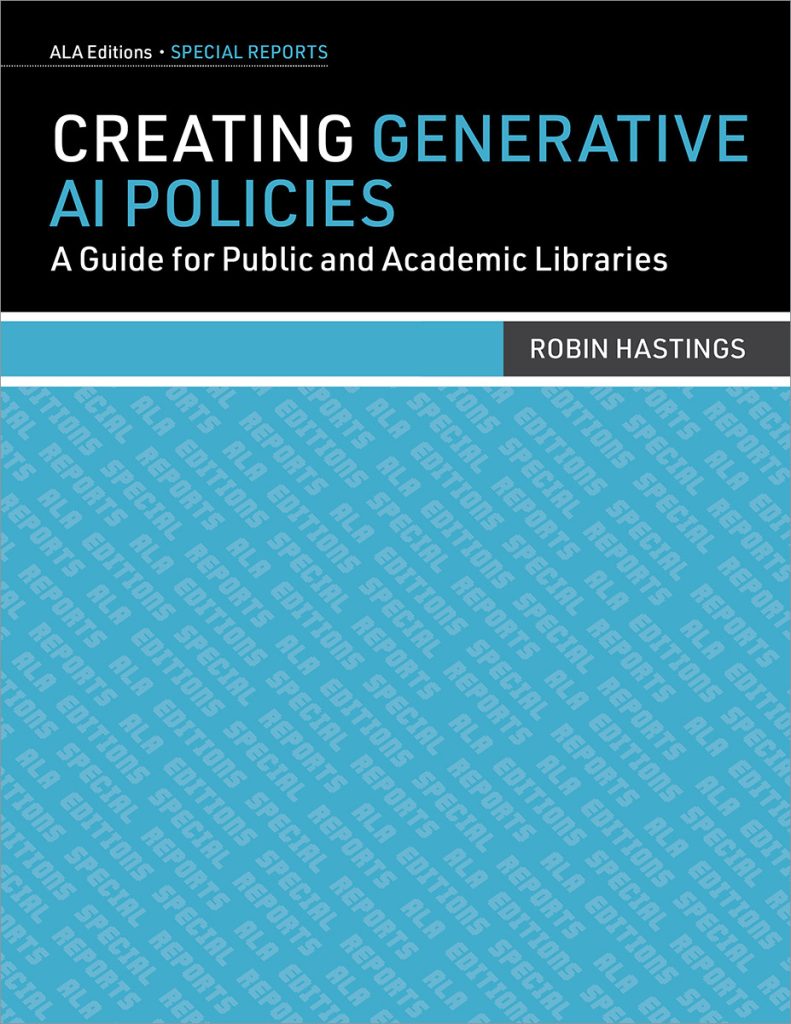
By Robin Hastings
Recommended for: Academic Libraries, Public Libraries
Grounded in core ALA principles, this guide will empower library administrators, managers, and trustees to craft AI-related policies that effectively serve their library and community.
Though it’s challenging to set policies for a technology that is so young and still in flux, the need is urgent. Because usage of AI presents both opportunities and risks, libraries must be proactive. The WEF (World Economic Forum) predicts that while there may be a loss of 92 million jobs to various AI tools, they see 170 million new jobs and roles emerging from the use of this new technology. Whether or not this proves correct, there are already digital literacy skills, including a basic understanding of the technology around AI, that libraries can help their patrons master; and because of data privacy, security, and ethics issues, library workers require clear AI policies too. Technology expert Hastings highlights the first attempts of libraries across the country to set up policies for the use of AI in their organizations, as well as policies created by cities and other similar institutions, to guide stakeholders in creating their own smart, forward-thinking course of action. Succinct and pragmatic, this timely resource
- provides a short overview of Generative AI history, basic technical knowledge, and the key arguments put forth by those in favor and those opposed to this technology;
- offers advice on discovering how library staff encounter AI in their day-to-day work, both in their own usage and by patrons, to inform what policies the library needs and which policies to consider adjusting for particular use cases;
- includes separate chapters focusing on staff-side policy and patron/public-facing policy, delving into essential considerations like staff training, privacy and data protection, security, AI usage for reference, patron education and AI literacy, and setting limits and boundaries on patron AI use;
- suggests useful approaches to ensure that AI policies are easy to follow and understand by library workers, patrons, and the wider community;
- discusses how to craft flexible procedures that can be updated as AI continues to change, drawing on technology management best practices; and
- offers links to additional resources like sample policy documents and a curated reading list for understanding the environment around AI.
Digital Literacy in Public Libraries
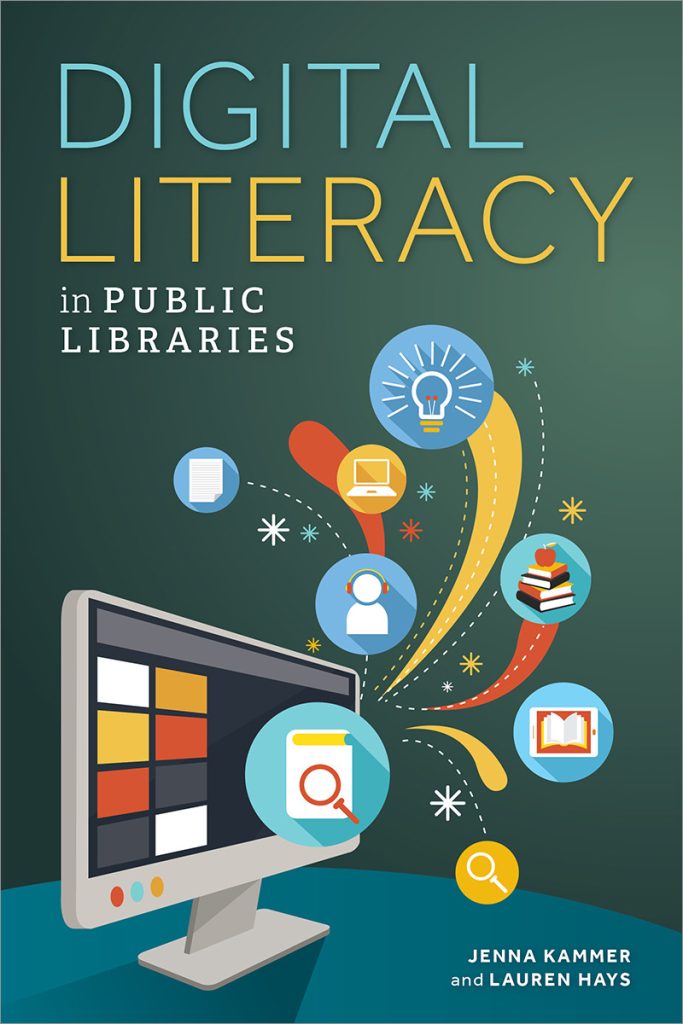
By Jenna Kammer and Lauren Hays
Recommended for: Public Libraries
The first guidebook specifically addressing the role of digital literacy in public libraries, this all-in-one resource explores the many services and resources provided by public libraries to close the digital divide and create more digitally inclusive communities, supporting readers in their own efforts.
Today’s libraries are thoroughly digital environments, not only storing and preserving written information electronically, but also emphasizing digital access to information as a pathway to equitably educating the community on issues of health, employment, education, and local history. And fostering patrons’ ability to effectively use digital tools for information and personal enrichment is a natural fit for public libraries, complimenting other initiatives like information literacy and media literacy. This book provides a holistic view of digital literacy support across the full spectrum of the public library, using real-world examples to help public libraries transform the work of digital literacy from answering on-the-fly tech questions to implementing full scale digital literacy programs which are integrated throughout the library. Public library workers, library board members, and those who want to understand more about the digital literacy imperative within public libraries will:
- delve into the concept of digital literacy, the ways in which it empowers individuals in digital systems of information, and how it fits in with other kinds of literacy;
- find ideas for effective digital literacy technical support, programming, services, spaces, collection development, outreach, and more;
- learn how to measure the impact of digital literacy initiatives, identify gaps within the community where the library can make an impact, and overcome challenges;
- discover guidance on building partnerships, both internal and external, and finding additional sources of funding to expand digital literacy opportunities within the scope of what is already available;
- receive practical advice from the “Ask the Expert” sidebars throughout the book, where practitioners share their knowledge and experience; and
- get adaptable tools such as sample language, an expenditure budget, an individual needs assessment, a digital literacy readiness checklist, survey instruments, and a lesson plan template that can be used for digital literacy programming.
Disrupting the School-to-Prison Pipeline: An Action Guide for Libraries
By Carrie Scott Banks and Jill Anderson
Recommended for: Academic Libraries, Public Libraries, School Libraries
The first of its kind, this guide draws from both research and current practice to provide an overview of the impact of carceral systems on youth while also sharing concrete ways for libraries to have a positive impact.
The school-to-prison pipeline impacts communities across the country; often, this system and families impacted by it remain invisible. But librarians, educators, and others who work with youth know first-hand that libraries and reading can be life-altering for youth impacted by incarceration. Written by public librarians who have supported youth before, during, and after incarceration, this book draws from their own experiences while showcasing insights from other library workers, researchers, educators, people who work in the juvenile justice fields, and mental health professionals. Designed to empower libraries and their staff to provide children and teens with information, visibility, knowledge and skills, recreation, and role models, it shares practical strategies for helping youth avoid the school-to-prison pipeline or contend with it. Readers will discover
- a concise explanation of the school-to-prison pipeline, including statistics on how and why it disproportionately impacts LGBTQ+, BIPOC, and disabled youth;
- concrete, proven strategies for disrupting youth incarceration pathways by giving young people the tools and support they need to avoid incarceration;
- steps for bolstering youth engagement during out of school time;
- guidance on how to align disciplinary approaches with trauma-informed practices when dealing with rowdy youth and other disruptive behavior;
- an overview of what libraries are doing to provide programs and services inside a youth facility, including literacy support, high school equivalency/GED programs, and televisiting;
- strategies for combatting the isolation of children of incarcerated parents by creating inclusive and welcoming library environments;
- information about the complex and difficult process of reentry for incarcerated youth, with adaptable ideas and lessons from the work being done in libraries for reentering adults; and
- an inspiring vision, extrapolating from work in adjacent fields, of what libraries can do to overcome barriers to bringing more youth into the library.
Ethnic Studies and Youth Literature: a Critical Reader
Edited by: Marilisa Jimenez Garcia and Sonia Alejandra Rodriguez
Recommended for: Academic Libraries, Public Libraries, School Libraries
Brings together scholars and practitioners to present an ethnic studies framework for studying and teaching youth literature.
For decades, youth literature has been reckoning with its role in systemic racism and oppression. In this landmark edited volume, Marilisa Jiménez García and Sonia Alejandra Rodríguez assemble a cadre of well-known women of color scholars and practitioners to make a case for ethnic studies as a path for pursuing racial justice in the field. Ethnic studies, they argue, demands that we go beyond seeing race, ethnicity, culture, and diversity as questions of identity and difference. Instead, it shows us how marginalized positionalities create epistemologies that shape our understanding of age, craft, genre, and knowledge production. Multidisciplinary and intersectional in its approach, Ethnic Studies and Youth Literature analyzes US imperialism through the lens of youth literature and vice versa, shedding light on the roots of our current culture wars and curriculum battles.
Intellectual Freedom Manual, Eleventh Edition
Compiled by the Office for Intellectual Freedom, American Library Association
Edited by Erin Jones
Recommended for: Academic Libraries, Public Libraries, School Libraries, Special Libraries
The newest edition of this essential resource offers clear, up-to-date insights on protecting intellectual freedom, fighting censorship, safeguarding privacy, and many other key IF topics.
When someone faces a difficult intellectual freedom (IF) issue, they usually don’t have time to wade through dense text to find the answers they need. Designed as a real-world reference, OIF’s Intellectual Freedom Manual provides trusted, comprehensive guidance for every library worker, from the volunteer to the director, in plain language. Whether you’re developing or reviewing policies, on-boarding new staff or trustees, responding to challenges and controversies, or studying librarianship, you’ll find this a vital tool, with features such as
- contributions that center the voices of Black, Indigenous, and other People of Color (BIPOC) and LGBTQIA+ people, who are often targeted by censorship efforts;
- chapters that begin with an overview explaining the big ideas and offering reflection questions;
- an introduction to IF and why it matters, drawing on ALA’s core IF documents and supported with adaptable policy worksheets;
- information and best practice guidance on key topics such as access, children and youth, censorship and internet filtering, collection development and management, copyright, meeting rooms and exhibit spaces, library programming, politics and religion, privacy, and visits and requests from law enforcement;
- stories from those whose lives have been impacted by IF, showing how library policies shape culture, protect staff and users, and affect real people;
- concise breakdowns of IF issues from legal experts, helping you understand the laws and how they apply in real situations;
- practical advice on advocating for IF, getting help when challenges arise, lobbying, and working with your elected officials;
- a thorough index to help you quickly find the information you need; and
- a helpful glossary and selected bibliography of additional resources.
Leading in Libraries: Perspectives from Lived Experiences
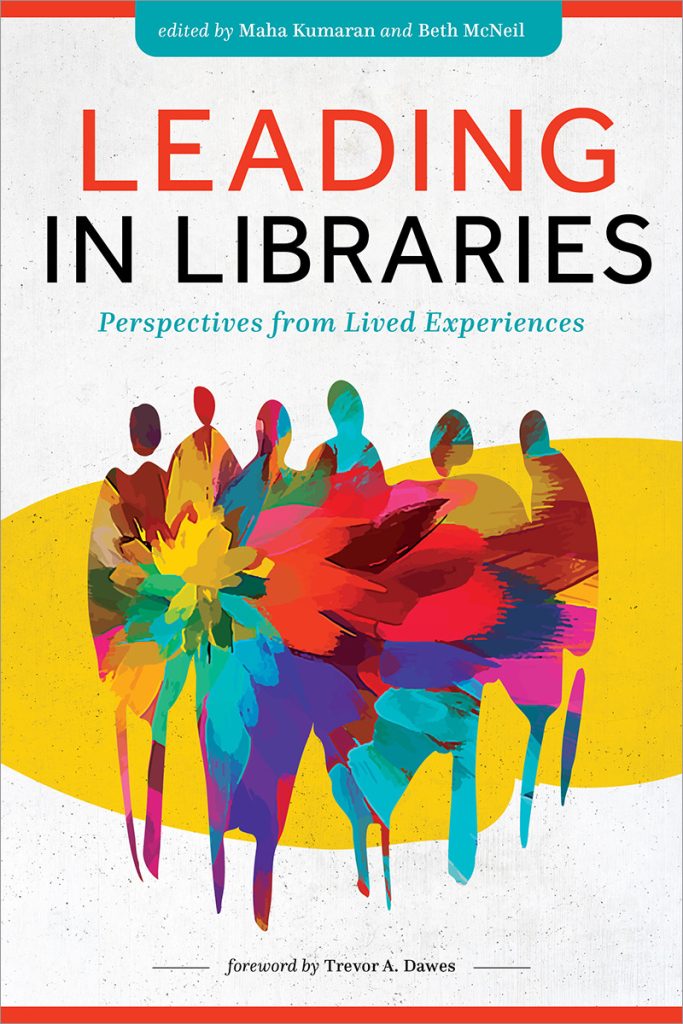
Edited by: Maha Kumaran and Beth McNeil, Foreward by: Travor A. Dawes
Recommended for: Academic Libraries, Public Libraries, School Libraries, Special Libraries
Showcasing diverse leadership styles and perspectives from across the globe, this collection invites readers to reimagine what effective leadership in libraries looks like, sharing both inspiration and practical guidance for those committed to creating more just and inclusive libraries.
In a world of constant change and evolving societal expectations, libraries stand at a critical crossroads. As institutions traditionally dedicated to knowledge preservation and dissemination, libraries now face unprecedented challenges that demand innovative leadership approaches centered on equity, diversity, and inclusion. This book represents a vital contribution to this conversation—one that amplifies marginalized voices and challenges us to view leadership through a social justice lens. Whether you’re a library administrator, a department head, a front-line library worker, or an LIS student, you will find both challenges to your thinking and concrete strategies for moving forward, including
- real-world perspectives from Canadian, American, Asian, and Australian contributors with varying identities;
- leadership roles, competencies, and lessons drawn from navigating the complexities of higher education and librarianship;
- guidance on inclusive strategic planning processes, shepherding working groups, effective administrative structures and hiring best practices, scholarly publishing, and other key topics;
- insights on dealing with ongoing momentous upheavals, such as changing political landscapes, pandemic disruptions and tragedies, and racial violence;
- explorations of the ways in which higher education institutions and their libraries are embracing DEI, Indigenization, and decolonization;
- reasons why reflection, intentionality, non-reactivity, and other ways of slowing down are so important for embracing thoughtful planning and implementing sustainable practices and ethical approaches; and
- advice on building meaningful relationships and resisting political, societal, and personal pressures.
Legislative Advocacy and Public Policy Work for Academic and Research Library Workers: Perspectives and Strategies
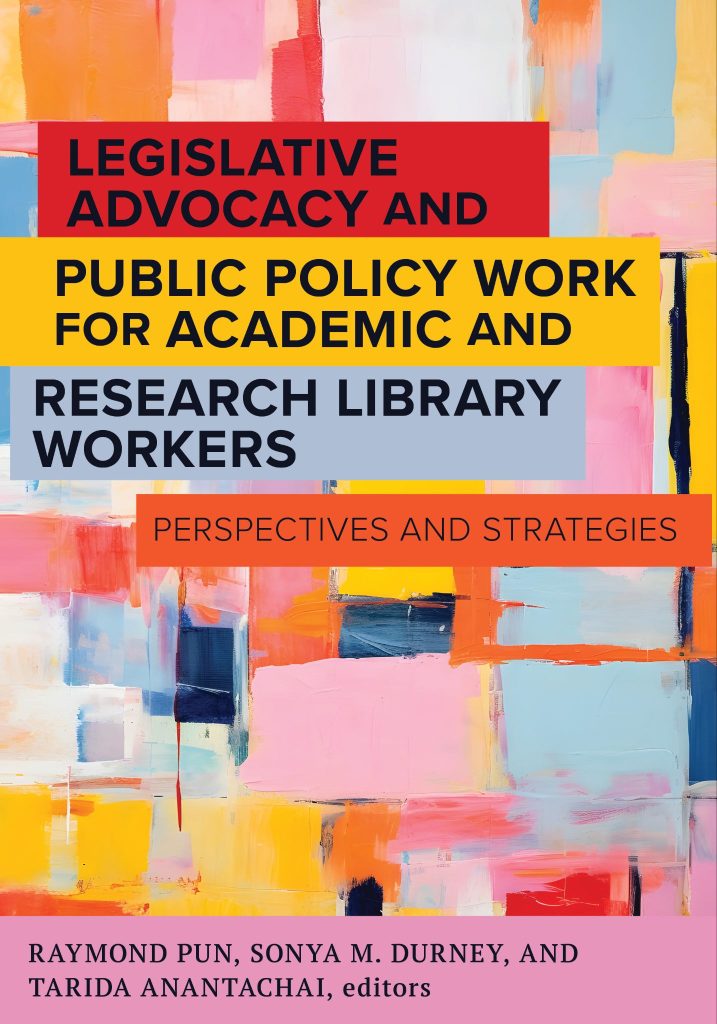
Edited by Raymond Pun, Sonya M. Durney and Tarida Anantachai
Recommended for: Academic Libraries, Special Libraries
Library advocacy is a deliberate, planned, and sustained effort to develop understanding and support for libraries and the communities they serve. Advocacy is not optional—it is a vital responsibility to protect the integrity and impact of libraries in society.
Legislative Advocacy and Public Policy Work for Academic and Research Library Workers is a comprehensive resource addressing our specific roles in influencing the various legislative and public policies that directly impact academic libraries, our academic communities, and the library community at large. It explores the ways academic and research library workers are engaging in advocacy, from testifying at governmental levels to collaborating with diverse constituents and legislators to bringing our academic advocacy efforts to discussions within state and regional library associations.
As educators and researchers, library workers bring invaluable expertise to the legislative table. We can help ensure that decisions affecting academic and research libraries and their communities are informed, equitable, and aligned with the values of intellectual freedom and lifelong learning. Legislative Advocacy and Public Policy Work for Academic and Research Library Workers offers ways to make meaningful legislative and policy impacts.
National School Library Standards for Learners, School Librarians, and School Libraries, Second Edition (AASL Standards)
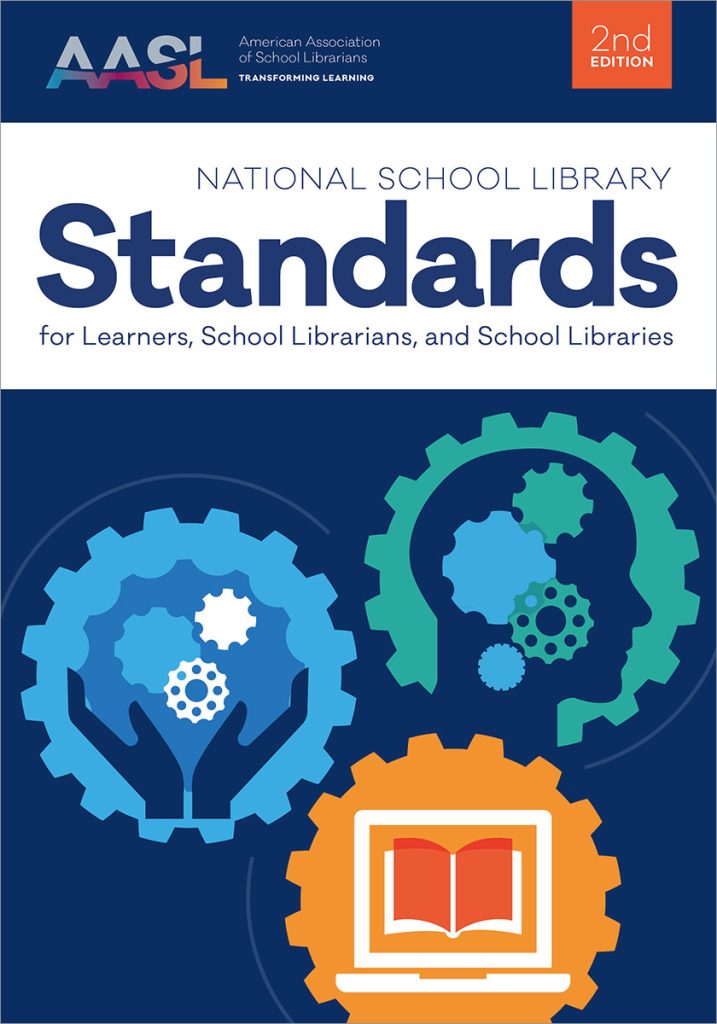
Published by American Association of School Libraries (AASL)
Recommended for: School Libraries
Updated to meet the evolving needs of the profession, the second edition of the National School Library Standards for Learners, School Librarians, and School Libraries will continue to empower school librarians to advocate for their essential role. Furthermore, the AASL Standards will ensure school libraries remain relevant and effective for all learners in today’s dynamic educational landscape.
Now in its second edition, the National School Library Standards for Learners, School Librarians, and School Libraries is an investment in your professional growth, your learners’ educational experiences, and the central role your library plays in the academic mission of your school. The AASL Standards position learners as active seekers and creators of knowledge, emphasizing their pivotal role in a learning process that is supported by school librarians and libraries. While the AASL Standards frameworks remain consistent, this edition refines and strengthens the supporting text, effectively bridging theory and practice. You will find valuable insights on how to design, support, assess, and personalize competency-based learning experiences across grade levels and content areas.
As a foundational resource for school librarians, the AASL Standards provide essential context for educational leadership. The second edition is enriched with actionable strategies and practical examples to enhance the application of standards, empowering school librarians to advocate for their essential role within the school system and contribute to broader school and district goals through the school library.
In the second edition, you will discover:
- a streamlined introduction to navigating the AASL Standards Frameworks, with an emphasis on understanding competencies and interpreting standards across grade levels and content areas;
- application examples drawn from contemporary topics such as media literacy, digital citizenship, and literature appreciation that demonstrate the connection between competency and skill development with growth outcomes;
- enhanced figures, tables, and actionable examples integrated throughout the book;
- greater focus on the five roles of school librarian and the Common Beliefs of the profession;
- more than two dozen practice scenarios that incorporate standards-based strategies for approaching common challenges with specific school library audiences;
- advocacy best practices for identifying stakeholder concerns, approaching the conversation, and proactively supporting learners, the school library, and yourself;
- guidance around goal setting and strategic planning with the Shared Foundations, aligning with other national educational movements and standards important to administrators;
- approaches for communicating with administrators to help them understand the extensive work school librarians do behind the scenes to ensure a relevant and effective school library with measurable impact on learning outcomes; and
- numerous evaluation tools, including a role-based evaluation checklist.
For more information about the research and development process, a project timeline, and answers to frequently asked questions, please visit standards.aasl.org/2ndedition.
Neal-Schuman Library Technology Companion: A Basic Guide for Library Staff, Seventh Edition
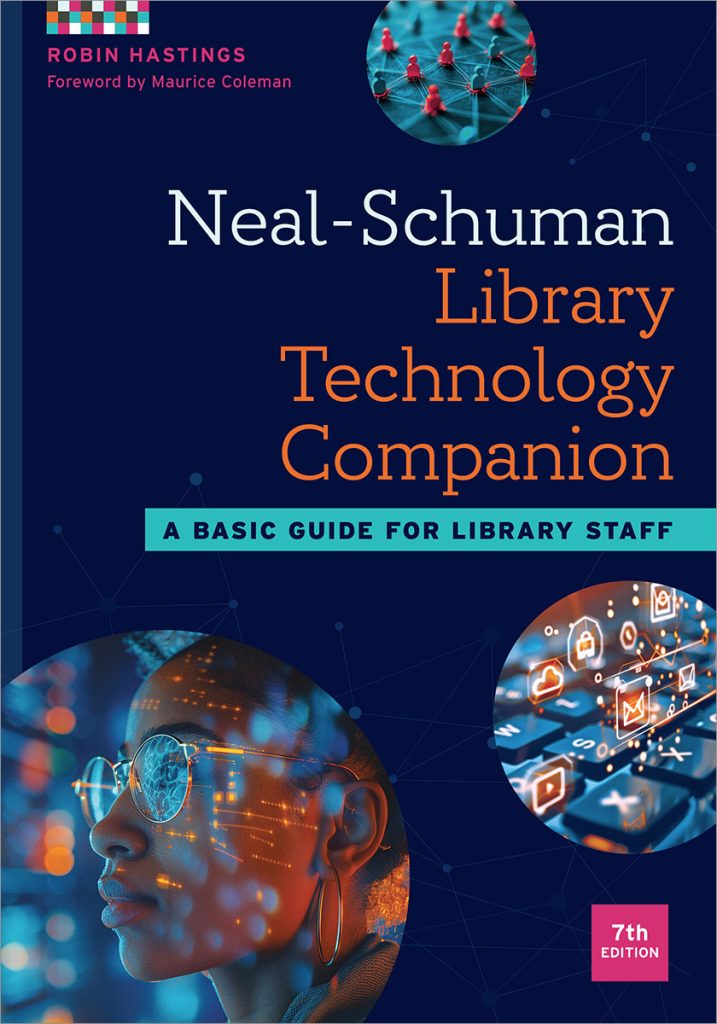
By Robin Hastings, Foreword by Maurice Coleman
Recommended for: Academic Libraries, Public Libraries, School Libraries, Special Libraries
This best-selling guide, newly refreshed and updated, will give readers at every stage of their career a sound and sensible way to consider, access, and use library technologies to better meet the needs of their patrons and communities.
Technology infuses every aspect of every day in every library, and thus basic technology skills are a prerequisite for everyone who works in a library. Providing a one-stop overview of all technologies used in libraries today, this comprehensive primer belongs at the top of the reading list for any current or future library professional looking to stay at the forefront of technological advancement. Representing a complete update of the book under a new author, this seventh edition of the guide is bolstered with fresh insights gleaned from librarians and library staff members sharing how they work with a given technology in their library settings. Readers will learn about
- how technologies have historically impacted libraries;
- electronic resources including e-books, full-text articles, and streaming media;
- the crucial role of free web information in supporting library research;
- discovery layers and other systems for organizing information to make it easier to find;
- desktops, laptops, tablets, and mobile devices;
- library websites, web services, screencasts, distance learning, and learning management systems;
- social networking and patron participation, with newly crafted guidelines;
- makerspaces and other possibilities for adding creative activities and technologies to libraries such as virtual reality and augmented reality;
- a comprehensive examination of how to build and maintain the library technology environment, with advice on crafting an effective plan, purchasing equipment, putting systems into operation, and preservation issues stemming from dead and dying technologies;
- Universal Design (UX) and adaptive/assistive technologies;
- protecting technology and technology users by securing collections, enhancing computer security, and safeguarding privacy; and
- possible future developments in library technology, with suggested resources for staying informed.
The New Instruction Librarian: A Workbook for Trainers and Learners, Second Edition
By Candice Benjes-Small and Rebecca Miller Waltz
Recommended for: Academic Libraries
Newly revised and updated, this best-seller continues to serve as the go-to resource for orienting library workers new to instruction, readying coordinators as they prepare to take on the job, and self-training for those settling into a new role or context.
Written by a team of library instructors whose “experience and expertise in this field is evident throughout” (VOYA), this one-stop starter kit has been praised as “a solid overview of academic instruction librarianship for both supervisors and novices” (Library Journal). Now the authors have updated it to better address differing perspectives and experiences in librarianship while thoroughly reflecting the significant ways in which the field has changed since the book’s first edition in 2016. Easing the transition into library instruction while supporting all those involved, including supervisors, colleagues, and trainees, this hands-on workbook
- incorporates research on teaching and learning from numerous disciplines, including but not limited to library literature, that has been sharpened and refreshed for this edition;
- guides readers through training a new colleague or someone new to instruction, complete with reflection questions, sample lesson plans, activities, and advice from experts throughout the field;
- explores the different roles an instruction librarian is usually expected to play, such as colleague, instructional designer, teaching partner, advocate, project manager, and learner;
- adopts a person-centered approach to the role, with new chapters on critical information literacy and sustainable practices; and
- provides tips on self-assessment, self-care, resiliency, and continuing education, both formal and informal, to set readers on a successful path of teaching, learning, and professional growth.
Practical Project Management for Libraries
By Kristen Clark
Recommended for: Academic Libraries, Public Libraries, School Libraries, Special Libraries
Librarians continue to work under budget constraints while still needing to increase the user experience and remove barriers to library resources. Learning to evaluate the best options for managing projects to accomplish goals while balancing with the reality of day-to-day work needs is integral to overall success.
In this book, readers will learn: how to balance the goals of the project with the reality of working in libraries today, what key questions can help move readers effectively through the project process and choose the right tools, best practices to ensure sustainability in project plans as well as outcomes, and how to incorporate diversity, inclusion, and accessibility principles into your project management. This practice guide provides step-by-step instructions to determine what project management tools and techniques match the needs of the particular library project and person/team’s skills level, while also providing these in the context of libraries’ specific cultures and norms.
Serving Patrons with Disabilities in Small and Rural Libraries: Practitioner’s Guide
Published by ALA (American Library Association)
Recommended for: Public Libraries
For many rural communities, the local library is an invaluable resource. It may be one of the few spaces, or the only space, within miles where someone can access the internet, get after-school help, gather information on local resources, pursue social services, or connect with other people in their community.
As a critical community hub, it is imperative that we investigate any obstacles that prevent people from accessing our libraries or being included in our program and service offerings. For people with disabilities, the library may have barriers that prevent it from being a usable resource. These can include facility barriers (e g no automatic door openers), communication barriers, (e.g. no information readily available about accessibility features), or barriers related to perceptions or unintentional stereotyping.
How can you make your library more accessible? This guide is designed to help you begin the work of improving your library’s accessibility and inclusion practices for people with disabilities. In the first section, we provide some preliminary information for getting started with this work.
The first three sections offer tips and best practices for increasing the accessibility of your library’s services, programs, and facilities. The final section provides additional recommended resources to help you dive further into this work.
Resource: Serving Patrons with Disabilities (free PDF)
Student Success Librarianship: Critical Perspectives on an Evolving Profession
Edited by Melody Lee Rood and Olivia Patterson
Recommended for: Academic Libraries
Student success librarian positions, while increasingly common in academic libraries, are still so new to the field that many librarians with this title are the first person in the position and their roles are ambiguous and difficult to define. They often include quantifiable metrics such as retention rates, academic persistence, and graduation rates as well as elements like well-being, belonging, and a sense of purpose. This broad scope has intensified already challenging and emotionally taxing work.
Student Success Librarianship: Critical Perspectives on an Evolving Profession examines this position through a critical lens and provides insight and advice to help the profession work toward a positive evolution of this important role. In three sections—Theory, Praxis, and Research—chapters written by student success librarians explore how to articulate, set boundaries for, and bring our humanity to the role; address student mental health and provide multilingual resources and support; and map both the current state of student success and a vision for its future.
Student success librarians can feel alone in both their love for and critiques of their profession and their roles within it. Student Success Librarianship can help you celebrate your work, find areas of improvement, and offers validation and inspiration.
Teaching Adult Learners: A Guide for Public Librarians
By Jessica A. Curtis
Recommended for: Public Libraries
As adult instruction becomes a more common part of library practice, librarians need guidance in an area that may not always have been a part of their library science education. This book provides the instruction necessary to instruct adult patrons.
Presenting complex concepts and ideas in an easy-to-understand format, this book applies learning theory to real-life situations and provides a much-needed resource for those responsible for or seeking to instruct adults in library settings.
The book introduces learning principles and techniques that will enhance your classes, programs, and one-on-one interactions as well as increase the memory retention of participants. It will help you not only to promote learning but also to create positive library interactions and build retention.
Current library instructional and theoretical texts address instructional programming but do not explain how the instructor handles learning instruction differently for individuals, general audiences, and specific audiences, or in passive situations such as through handouts or online interactions. This guide differs from other works in that it addresses all adult services positions, not only those with the title of “instructional librarian,” and addresses the full scope of instruction that librarians need to better meet patron needs.
Teaching News Literacy in the Age of AI: A Cross-Curricular Approach
By Cathy Collins
Recommended for: Academic Libraries, School Libraries
Get the tools and strategies you need to help students understand why news matters and how to navigate the journalism landscape in the age of AI, misinformation and conspiratorial thinking.
News literacy is critical to understanding the role that information and a free press play in our lives, and to maintaining a robust democracy. However, effective news literacy education resources at the K–12 level are hard to find. This book fills the gap, offering a civic-minded and globally oriented perspective to help teachers integrate news literacy across curriculum areas to guide students in learning about the importance of journalism in a democracy and in our world.
Through practical tools, resources and lesson plan ideas, the book helps educators foster the skills students need to become discerning consumers and creative producers of news. Educators will develop strategies for sparking meaningful classroom discussions that empower students to evaluate, interpret and synthesize information, pushing students beyond the concept of “fake news” to become expert critical thinkers and content creators.
Universal Design for Learning: Principles, Framework, and Practice, 2nd Edition
By Anne Meyer and David H. Rose, Edited by David Gordon
Recommended for: Academic Libraries, School Libraries
The much anticipated updated Second Edition of Anne Meyer and David Rose’s foundational text, Universal Design for Learning: Theory & Practice (2014)!
Universal Design for Learning (UDL) is a practical, research-based framework that enables all educators to respond to individual learning differences through the design of inclusive goals, methods, materials, assessments, and environments.
Universal Design for Learning: Principles, Framework, and Practice – provides an accessible introduction to the scientific foundations of the framework and the many ways UDL can help shape inclusive learning design.
New insights into accessible materials, universally designed learning environments, the critical role of context, and strategies for implementation are featured. Case stories and reflections reveal the many ways UDL plays out in K-12 settings, postsecondary environments, career preparation programs, and more.